
L-TOPIC & Physical AI
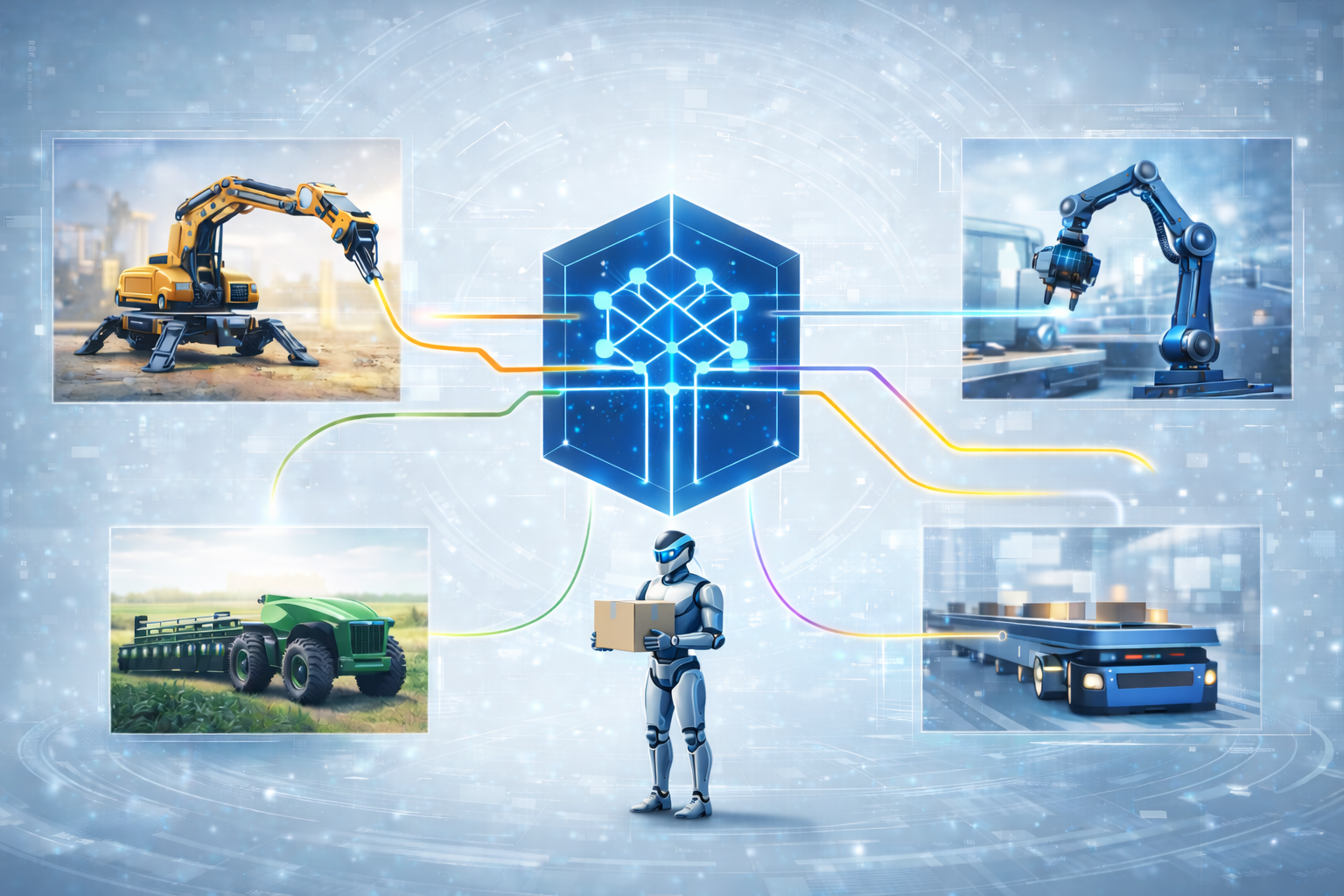
L-TOPIC is a hardware-independent cognitive core. It can inhabit any body — humanoid robots, mobile machines, industrial arms, exoskeletons, or purely software systems — while preserving continuity over time.
The body becomes interchangeable. The intelligence persists: perception → understanding → decision → orchestration of action.
What changes in Physical AI
Most physical AI systems embed intelligence inside the machine. When the hardware changes, the intelligence resets: new calibration, new context, lost operational memory, inconsistent behaviors. That works for demos — not for deployment.
The L-TOPIC approach
L-TOPIC separates the cognitive core from the body. Sensors and actuators become a “driver layer”: swappable interfaces that connect any device to the same decision system.
The result: physical systems that remain coherent over weeks, learn across missions, and carry accountability — even when their bodies change.
Why this matters
Physical AI is accelerating. But most systems are optimized for short bursts of intelligence, not for coherent long-horizon operation. Real deployment requires:
Continuity across time
The system stays consistent across weeks, changing constraints, and repeated operations.
A world model
Actors, rules, risks, hypotheses, and evolving state — not just reactive control.
Traceability & accountability
Why a decision was made, what evidence it used, and what changed after execution.
Safe orchestration
Tools + actions executed with constraints, checks, fallback behaviors, and verification loops.
How L-TOPIC fits the embodied stack
L-TOPIC orchestrates specialized modules and adapts to available sensors. The core remains the same; the embodiment layer changes.
Perception & sensor fusion
Vision, audio, telemetry, and external inputs merged into a coherent state.
Memory per project / mission
Decisions, constraints, procedures, failures, and learnings — structured and reusable.
Reasoning & planning
Goals → tasks → sequencing → replanning as reality changes.
Execution & control interface
Commands mapped to the device: robot, arm, mobile base, exoskeleton, or software agent.
It is sustained decision-making under evolving constraints — with memory and accountability.
Where this becomes valuable
If your system must operate in real environments with responsibility, you need continuity — not just “smart moments”.
Industrial operations
Inspection, maintenance, repetitive workflows, and multi-step procedures.
Construction / field work
Long projects, evolving constraints, documentation, and coordination with human teams.
Mobile robotics
Navigation + mission logic + safety constraints + incident memory.
Humanoid assistants
Reliable task execution and persistent context across days, places, and users.